Choosing among China’s best Wall Mount Power Supply manufacturers requires more than comparing prices. This guide examines suppliers through product quality, engineering capability, and manufacturing experience. Buyers often see similar plastic housings and identical wattage labels. However, internal components, thermal design, and testing discipline can differ considerably. A dependable Wall Mount Power Supply should provide stable voltage, controlled heat, and secure insulation. It should also fit the intended socket, enclosure, and installation environment. In practical projects, a quiet adapter can matter as much as its rated output. Small details matter.
We focus on evidence rather than attractive catalogs. Factory experience, quality-control procedures, and traceable test records deserve careful attention. Relevant certifications may support credibility, but certificates alone cannot prove consistent production. Buyers should request samples, test reports, inspection procedures, and clear warranty terms. Important checks include load regulation, short-circuit protection, temperature rise, connector strength, and long-duration operation. These details reveal how a manufacturer performs beyond a sales presentation. Sometimes, the documentation is incomplete. That is a warning, not a final judgment.
The article will compare Chinese manufacturers by product range, customization ability, minimum order quantities, lead times, communication, and after-sales support. We will also consider how suppliers handle design changes and batch inconsistencies. No supplier is perfect. A transparent manufacturer can explain limitations without exaggeration. This is where buyers need honest reflection: the lowest quotation may create higher testing, replacement, or delay costs later. By combining sample evaluation, factory communication, and independent verification, readers can build a practical shortlist of reliable Wall Mount Power Supply partners for real applications.
What Is a Wall-Mount Power Supply?
What Is a Wall-Mount Power Supply?
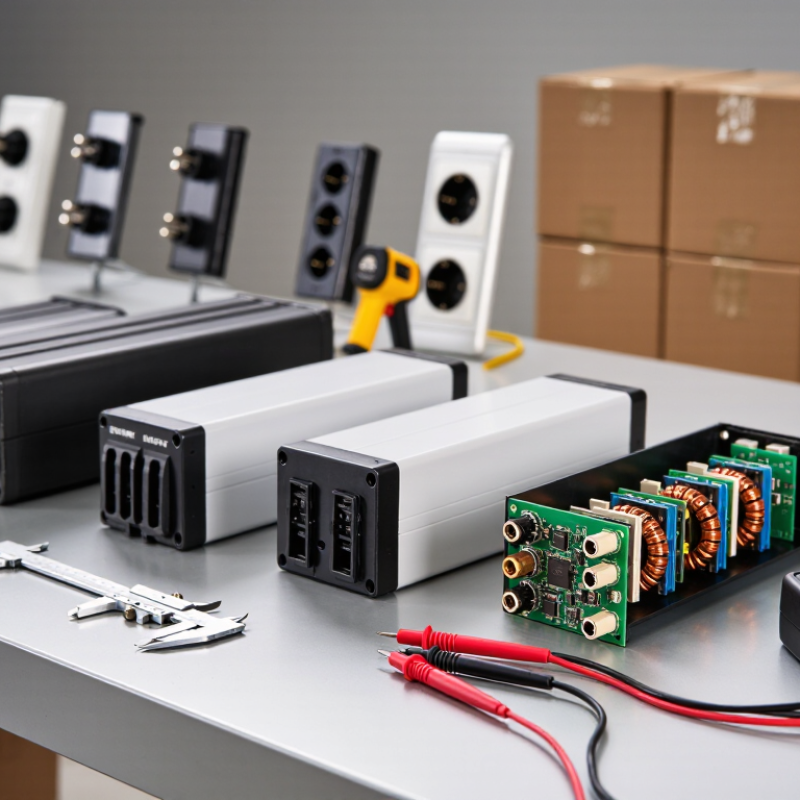
A wall-mount power supply is an AC-to-DC converter built into a compact enclosure. It plugs directly into a wall socket, then delivers controlled low-voltage power through a cable. Unlike a desktop adapter, it needs no separate power brick on the floor. This saves space beside routers, security equipment, LED systems, and small control panels.
Its internal circuit normally includes a transformer or switching stage, rectification, voltage regulation, and protection components. Overcurrent, overvoltage, and short-circuit protection matter in daily use. The output label should show voltage, current, polarity, and connector size clearly.
A 12-volt, 2-amp model can provide up to 24 watts under suitable conditions. Do not treat that figure as unlimited. Heat, cable length, and ventilation can reduce practical performance.
Market data supports continued demand for compact power conversion. Grand View Research estimates the global power supply market will expand at about 6.5% annually from 2024 to 2030. Mordor Intelligence also identifies industrial automation and consumer electronics as important growth areas. These reports describe the wider market, not wall-mount units alone. That distinction is easy to miss.
In real installation work, I check socket fit, enclosure temperature, and standby behavior before approving a unit. A power supply may meet its printed rating yet perform poorly in a warm, enclosed corner.
Efficiency is important, but noise and service access deserve equal attention. Sometimes, the smallest housing creates the biggest maintenance problem.
Key Features of China’s Leading Manufacturers
China Best Wall Mount Power Supply Manufacturers?
China’s leading wall mount power supply manufacturers focus on safety, stability, and practical design. Their products often support household appliances, networking equipment, lighting systems, and industrial controls. A reliable manufacturer uses flame-retardant enclosures, secure wall plugs, and well-insulated internal wiring. Thermal management is equally important. Ventilation gaps and tested components help prevent excessive heat during long operation.
Testing matters. Reputable factories perform insulation, overload, short-circuit, leakage, and aging tests before shipment. They can also provide production records, sample reports, and traceable component information. Certifications such as CE, RoHS, or other regional approvals should match the target market.
An ISO-based quality system adds confidence, but paperwork alone cannot prove product consistency. Factory audits and independent sample testing remain valuable.
Customization is another key feature. Manufacturers may adjust output voltage, cable length, connector type, label design, and enclosure color. Clear engineering communication reduces costly revisions. I once considered price the main selection factor; that view was too narrow. A cheaper unit may require more inspection and create higher replacement costs. Some suppliers respond quickly but document poorly. That gap matters. Buyers should request samples, review test data, inspect packaging, and confirm after-sales support before placing large orders.
How to Compare Wall-Mount Power Supply Suppliers
China Best Wall Mount Power Supply Manufacturers?
How to Compare Wall-Mount Power Supply Suppliers
Comparing wall-mount power supply suppliers requires more than checking the lowest quotation. Review their engineering experience, production controls, and ability to support your exact application. Ask for input voltage ranges, rated output, standby consumption, operating temperature, and enclosure dimensions. A supplier should explain these figures clearly, not hide behind general claims.
Request a sample for practical testing. Connect it to your actual load, then observe heat buildup, output stability, cable strain, and noise. Check whether mounting holes align with your installation plan. I have seen attractive samples fail after several hours because ventilation was overlooked. That mistake is easy to repeat. Ask for test records, component traceability, inspection procedures, and safety documentation relevant to your target market. Independent laboratory reports are more useful when their scope and dates are verifiable.
Supplier reliability also depends on communication. Measure response time, engineering feedback, sample revisions, and handling of defects. A capable factory can discuss fault protection, insulation design, surge resistance, and production tolerances in practical terms. Visit the facility when possible, or request a live video inspection of assembly and testing areas. Do not rely only on polished photographs. A small supplier may offer strong technical attention, but limited capacity can create delivery pressure. Compare minimum order quantities, lead times, warranty terms, spare parts, and corrective-action records before choosing a long-term partner.
Safety Standards and Quality Certifications to Check
When comparing China’s wall mount power supply manufacturers, safety evidence should come before price. Ask for a current test report under IEC 62368-1, not only a printed certification logo. This standard evaluates electric shock, fire, mechanical, and thermal hazards. The report should match the exact model, input range, output rating, plug type, and production site.
Efficiency data also deserves attention.
The ENERGY STAR External Power Supply Specification Version 3.1 sets active-efficiency and no-load limits for applicable power supply classes. For many products, no-load consumption is limited to 0.10 watts. The European Commission’s Ecodesign Regulation 2019/1782 uses the same 0.10-watt threshold for several low-voltage external supplies. Check measured values at 115 V and 230 V. A single laboratory result is not enough.
In factory audits, I would inspect isolation distance, fuse selection, transformer insulation, and temperature rise near the wall socket. Request CB Scheme documentation, EMC test results, RoHS evidence, and production-line sampling records. Certification scope matters. A certificate for one output version may not cover another. UL or CE markings alone prove little without traceable files. I have seen attractive samples fail after repeated heat cycles; that is easy to overlook. Manufacturers should also provide MTBF assumptions and protection tests for short circuit, overload, and overvoltage. The U.S. Department of Energy’s External Power Supply Technical Support Document shows why efficiency standards matter: small standby losses become significant across millions of units. Pricing still matters, but weak documentation is an expensive warning.
How to Choose the Best Manufacturer for Your Needs
Choosing the best wall mount power supply manufacturer starts with your electrical requirements, not a factory’s sales presentation. The 2024 MarketsandMarkets Power Supply Market report projects steady market growth through 2029, driven by automation, networking, and distributed equipment. That growth also increases supplier choices—and confusion. Define voltage, current, input range, mounting space, connector type, and operating temperature before requesting quotations. A 24 V, 2 A unit may look suitable, but startup current and continuous loading can change the decision.
Ask manufacturers for test records, component traceability, and certificates that match your destination market. Check safety, electromagnetic compatibility, insulation, short-circuit protection, and thermal performance. Request samples from the intended production line, then test them at low voltage, full load, and elevated temperature. The U.S. Department of Energy’s external power supply analysis highlights the importance of active efficiency and no-load performance; these figures deserve verification rather than promises. Look for efficiency curves, standby consumption, ripple measurements, and documented burn-in procedures.
Factory experience matters in small details. Inspect solder joints, enclosure gaps, strain relief, and labeling during an audit. Review failure rates by batch, corrective-action records, and replacement support. A supplier with clear engineering communication is often safer than the cheapest quotation. Still, no audit is perfect. A clean factory visit can hide weak change control. Keep approval samples, define inspection points, and repeat testing after major component changes. That discipline protects reliability when the first shipment is no longer treated as special.
FAQS
It converts wall-socket AC electricity into controlled low-voltage DC power. It plugs directly into the socket and avoids a floor-mounted power brick. Common uses include routers, lighting systems, security devices, and control panels.
Check voltage, current, polarity, connector size, and output type. A 12-volt, 2-amp supply can deliver up to 24 watts under suitable conditions. That rating is not unlimited.
Confirm the equipment’s voltage and required current before ordering. Check startup current, continuous load, connector fit, and polarity. A unit may look suitable but fail during startup.
Test the sample with your actual equipment. Observe heat, voltage stability, cable strain, noise, and mounting alignment. Run it for several hours. Short tests can miss overheating.
Request test records, component traceability, inspection procedures, and relevant safety documents. Ask for ripple data, efficiency curves, standby consumption, and burn-in records. Verify report scope and dates.
Compare engineering responses, sample revisions, defect handling, minimum orders, lead times, warranty terms, and spare-part support. Ask for corrective-action records. Cheap quotes can create expensive delays.
Heat can reduce practical output and shorten component life. Test the supply in its real enclosure, especially near warm equipment. Check ventilation, surface temperature, and standby behavior. Small housings can trap heat.
Inspect solder joints, enclosure gaps, strain relief, labels, and mounting points. Confirm the sample comes from the intended production line. A clean visit is helpful, but not perfect.
Yes. Repeat key tests after major component or process changes. Keep an approved sample and defined inspection points. I may trust the first batch too much. That is a useful warning.
Conclusion
A Wall Mount Power Supply is a compact electrical unit designed to be installed directly on or near a wall, providing stable power while saving space and reducing cable clutter. China’s leading manufacturers typically focus on efficient designs, dependable thermal management, durable housings, flexible voltage and current options, and consistent production quality. When comparing suppliers, buyers should evaluate product specifications, customization capabilities, manufacturing capacity, testing procedures, delivery reliability, communication, and after-sales support rather than relying only on price.
Safety and quality should be central to the selection process. Check whether the manufacturer follows relevant international safety requirements and can provide appropriate certifications, test reports, traceable materials, and quality-control documentation. The best manufacturer for your needs will be one that understands your application, offers suitable protection features such as overload, overvoltage, and short-circuit protection, and can maintain stable performance across different operating conditions. A careful assessment of technical capability, compliance, service, and long-term reliability will support a more confident purchasing decision.

 NVVV Electric