Choosing a Programmable Power Supply in 2026 requires more than comparing voltage ranges and screen sizes. Modern laboratories test compact converters, battery systems, electric-vehicle modules, and sensitive communications hardware. Each application demands different control, protection, and measurement capabilities. A supply that performs well on a workbench may fail during fast load changes or long automated test sequences.
Dr. Alex Lidow, a recognized power-electronics engineer and GaN technology pioneer, has emphasized, “Power conversion is about managing energy precisely.” That principle should guide every purchase. Examine voltage and current resolution, transient response, ripple, remote sensing, and output stability. Check whether the interface supports SCPI, LAN, USB, or industry-standard automation software. A quiet fan also matters when measuring low-level signals. Small details become expensive problems.
Do not choose the highest power rating automatically. Oversizing can increase cost, noise, and unused capacity. Undersizing creates another risk. It may force the supply into current limiting during realistic tests. Bidirectional operation, regenerative energy handling, and high-speed digital control may be valuable for battery and motor applications. Yet they are unnecessary for simple bench repairs.
The best choice depends on actual test conditions. Write down the load profile. Measure the cables. Consider future projects, but avoid paying for impressive specifications you will never use. Specifications can mislead. A careful evaluation, supported by repeatable measurements and reliable manufacturer documentation, produces a safer decision. There is no perfect model. Even experienced engineers sometimes discover that their first choice was too optimistic.
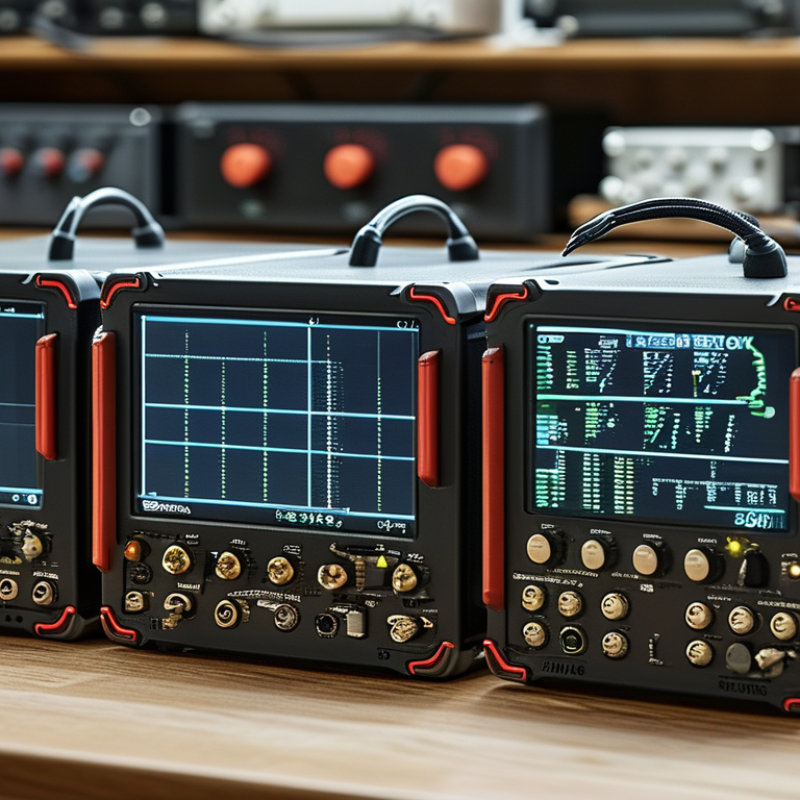
How to Choose a Programmable Power Supply in 2026?
A programmable power supply converts electrical input into controlled DC output. Unlike a fixed adapter, it accepts commands through a front panel, USB, LAN, or industrial bus. You can set voltage, current, rise time, and protection limits. The instrument then regulates output through feedback. It measures actual voltage and current, compares them with the target values, and adjusts its switching circuit continuously. That closed-loop action helps protect sensitive boards during testing.
Look for the operating range first. A 0–30 V, 0–5 A model cannot test a 48 V device safely. Check regulation, ripple, resolution, response time, and output accuracy. Remote sensing also matters. Two thin sense wires can compensate for voltage loss across long test leads. In practical bench testing, loose terminals often create larger errors than the supply itself. This detail is easy to overlook.
Energy use deserves more attention in 2026. The International Energy Agency’s Electricity 2024 report estimates that data centers consumed about 460 TWh globally in 2022, with demand potentially exceeding 1,000 TWh by 2026. Efficient power conversion therefore affects both laboratories and production lines. Select programmable control when automated testing, repeatable profiles, or data logging justify the added cost. Otherwise, the extra features may become expensive decoration. I still verify readings with an independent multimeter, because software displays can look precise while the wiring remains imperfect.
Define What a Programmable Power Supply Is and How It Works
| Selection Dimension | What It Means | Typical Technical Data | Why It Matters | Recommended Selection Guidance |
|---|---|---|---|---|
| Definition | A programmable power supply is an electronic source that provides controlled DC or AC power while allowing output settings to be changed through a front panel, computer interface, script, or automated test system. | Common programmable parameters include voltage, current, power limit, output state, protection thresholds, timing, and sequencing. | It enables repeatable testing instead of manual adjustment and supports automated validation of electronic devices. | Choose a model with the control functions and interfaces required by the test system, not only the required output rating. |
| How It Works | The supply converts input power into a regulated output. A control loop continuously measures the output and adjusts the power-conversion stage to follow the programmed setpoint. | Typical control modes include constant-voltage (CV), constant-current (CC), and, on some models, constant-power (CP). | Closed-loop regulation helps maintain stable output when the load changes. | Verify control-loop behavior, transient response, and the CV-to-CC crossover behavior for dynamic loads. |
| Output Type | The supply may provide single-channel DC, multiple isolated DC channels, bipolar output, or AC output depending on the application. | DC is common for electronics; AC sources are used for power-conversion, grid-simulation, and appliance testing. | The output architecture determines wiring flexibility, isolation, synchronization, and test coverage. | Select isolated channels when circuits must operate at different potentials or when series/parallel configurations are required. |
| Voltage Range | The adjustable voltage span available at the output. | Laboratory DC supplies commonly cover ranges such as 0–30 V, 0–60 V, 0–120 V, or higher; specialized systems can reach hundreds or thousands of volts. | The maximum voltage must exceed the device’s normal operating voltage and required fault or margin tests. | Choose a range that covers the highest test point without sacrificing the resolution and accuracy needed at lower voltages. |
| Current Range | The maximum current the supply can deliver while maintaining its specified regulation and protection behavior. | Bench supplies may range from milliamps to tens of amperes; modular systems can provide much higher current through parallel operation. | Insufficient current can cause voltage collapse or trigger current limiting during startup and load transients. | Allow headroom above the device’s maximum steady-state current and include inrush or charging current where applicable. |
| Power Rating | The maximum output power, generally calculated as voltage multiplied by current within the supply’s operating envelope. | Typical laboratory units range from below 100 W to several kilowatts; high-power automated systems may be much larger. | A supply may reach its voltage limit or current limit before reaching its advertised maximum power. | Check the voltage-current operating quadrant or power curve rather than relying only on the headline wattage. |
| Voltage Regulation | The ability to keep the output voltage near the programmed value as line voltage or load current changes. | Specified as a percentage, absolute error, or a combination of offset and proportional error. | Good regulation reduces measurement uncertainty and prevents the device under test from receiving an unintended supply voltage. | Compare regulation specifications under both line and load changes, especially for precision sensor or converter testing. |
| Current Regulation | The accuracy and stability with which the supply limits or regulates output current. | Often specified using an offset plus a percentage of the setpoint or full-scale range. | Accurate current limiting protects prototypes, LEDs, batteries, and other current-sensitive loads. | Use a lower current range, if available, when testing low-current devices because it normally provides finer setting resolution. |
| Ripple and Noise | Unwanted periodic and random variation superimposed on the DC output. | Usually reported as RMS noise and peak-to-peak ripple over a stated bandwidth; values vary significantly by design and load. | Excessive ripple can affect analog circuits, ADC measurements, RF testing, and sensitive sensors. | Compare measurements using the same bandwidth and probing method. Do not compare RMS and peak-to-peak values directly. |
| Transient Response | How quickly and accurately the output recovers after a sudden load or programming change. | Important specifications include recovery time, deviation magnitude, slew rate, and programmable voltage/current response. | Fast-changing loads can expose instability that is not visible during steady-state testing. | Choose a supply with documented dynamic-load performance when testing processors, wireless devices, motors, or converters. |
| Programming Resolution | The smallest voltage, current, or power increment that can be entered or controlled. | Resolution may be specified in digits, counts, millivolts, milliamps, or a percentage of range. | Higher resolution improves repeatability for characterization and low-level operating-point tests. | Check resolution separately from accuracy; a display can show many digits without providing equivalent measurement accuracy. |
| Measurement Accuracy | How closely the internal voltage and current readings represent the actual output values. | Typically stated as a percentage of reading plus a percentage of range or a fixed offset. | Accurate readback is essential when the power supply is also used as a measurement instrument in automated tests. | Review accuracy across temperature, time, and operating range, and confirm whether calibration is traceable if required. |
| Remote Sensing | A pair of high-impedance sense connections that compensates for voltage drop in the output leads. | Useful when cable resistance causes a meaningful difference between the supply terminals and the load terminals. | It improves load-end voltage accuracy during high-current operation or when long cables are used. | Select remote sensing for high-current tests, long cable runs, or tight voltage-tolerance requirements; follow the wiring instructions carefully. |
| Protection Functions | Hardware and software safeguards that limit unsafe operating conditions. | Common functions include overvoltage protection, overcurrent protection, overpower protection, overtemperature protection, and output shutdown. | Protection reduces the risk of damaging the device under test, the supply, and connected measurement equipment. | Prefer independently configurable protection thresholds and clearly defined latch, foldback, and automatic-recovery behavior. |
| Output Sequencing | The ability to apply voltage rails in a defined order with programmable delays, ramps, and shutdown conditions. | Sequences may include multiple steps, dwell times, voltage ramps, current limits, and trigger inputs. | Many embedded systems require controlled power-up and power-down to avoid latch-up, corruption, or overstress. | Choose built-in sequencing when repeatable multi-rail testing is needed without an external controller. |
| Remote-Control Interfaces | Communication methods used to configure, monitor, and automate the supply. | Common interfaces include USB, LAN, serial communication, and digital trigger or interlock connections. | The interface affects integration effort, test speed, network security, and long-term maintainability. | Confirm command compatibility, driver support, trigger timing, data logging, and the availability of a documented programming protocol. |
| Automation Compatibility | The ability to operate reliably within a larger automated test and measurement system. | Important features include SCPI-style commands, status registers, error queues, event triggers, and synchronized measurements. | Consistent automation behavior improves throughput and reduces operator-dependent errors. | Test the complete communication workflow, including initialization, fault recovery, timeout handling, and power-cycle behavior. |
| Isolation and Grounding | Electrical separation between output terminals, chassis ground, input power, and other channels. | Isolation limits are application-specific and must be checked for both DC and transient conditions. | Incorrect grounding can create measurement errors, ground loops, or unsafe current paths. | Review channel-to-channel and channel-to-ground isolation ratings, floating limits, and permitted series or parallel connections. |
| Efficiency and Thermal Design | How effectively the supply converts input power into output power and manages heat. | Switch-mode supplies generally offer high power density; linear designs may provide lower noise but dissipate more heat. | Efficiency affects energy use, cooling requirements, acoustic noise, rack density, and operating cost. | Balance noise performance against efficiency. For continuous high-power operation, verify derating and cooling requirements. |
| Operating Environment | The temperature, humidity, altitude, vibration, and installation conditions under which specifications remain valid. | Specifications are commonly given for a defined ambient temperature range and may include altitude or derating limits. | Performance and available output power can change substantially outside laboratory conditions. | Check storage and operating limits, rack ventilation, fan clearance, derating curves, and calibration interval requirements. |
| Best-Fit Use Case | The application profile determines which specifications deserve priority. |
Precision electronics: low noise and high accuracy Power conversion: fast transients and high power Production test: automation and sequencing Battery work: bidirectional operation and protection |
No single specification defines the best programmable power supply for every test environment. | Rank voltage, current, power, noise, transient response, interfaces, protection, and total cost according to the actual test plan. |
Record normal voltage, startup voltage, operating current, and peak current. Motor startup may briefly demand much more. Measure the real load.
Calculate power with voltage multiplied by current. A practical 20 percent margin can provide breathing room. It is not universal. Check continuous output ratings carefully.
Larger capacity can cost more and behave poorly with very light loads. Unused capacity adds complexity. Bigger is not automatically better.
Match the channel count to your test setup. Multiple channels help when circuits need separate voltages. Extra channels may sit unused and complicate operation.
Check resolution, setting accuracy, readback accuracy, ripple, and noise. Sensitive sensors often need cleaner power. A bright display proves very little.
Regulation shows resistance to load or line changes. Resolution is the smallest programmable step. Accuracy shows how close the output is to the requested value. These are different.
Remote sensing can correct voltage loss through long test leads. Overvoltage and overcurrent limits can prevent expensive circuit mistakes. Use them before testing becomes stressful.
USB, network, or serial control can support automated benches. Check command speed, software compatibility, logging, and output sequencing. The details can be annoying. They still matter.
Read percentage and millivolt terms together. At 30 volts, ±(0.05% + 10 mV) can mean about 25 mV difference. That may matter in sensor circuits.
Check recovery time, protection behavior, cable heating, and actual load conditions. A cooling fan once became distracting near maximum output. My preferred margin changed afterward.
Choosing the right Programmable Power Supply begins with understanding how it converts and controls electrical energy according to user-defined settings. Start by determining the required voltage range, maximum current, total power capacity, number of outputs, and whether the supply must support constant-voltage, constant-current, or other operating modes. These requirements should reflect both current testing needs and possible future projects.
Next, compare regulation stability, display and setting resolution, measurement accuracy, response speed, and available programming methods. Consider whether front-panel control, computer software, or automated commands through digital interfaces will best fit your workflow. Safety should also be a priority, including overvoltage, overcurrent, overtemperature, short-circuit, and input protection. Finally, evaluate remote monitoring, data recording, ease of use, physical size, reliability, and total cost. The best model is not necessarily the most powerful one, but the option that provides suitable performance, practical control features, dependable protection, and enough flexibility for your application and future expansion.

 NVVV Electric