How to Choose an Industrial Power Supply in 2026?

Time:2026-10-23 Author:Mason
0%

Choosing an Industrial Power Supply in 2026 requires more than comparing wattage and purchase price. Modern factories demand stable energy for robots, sensors, machine vision systems, and connected control panels. A suitable unit must handle voltage variation, heat, vibration, dust, and sudden load changes without creating downtime.

Real-world experience shows that printed specifications tell only part of the story. A 480-watt model may appear adequate, yet startup surges can exceed its rated capacity. Engineers should examine continuous output, peak performance, efficiency, cooling method, protection features, and expected service life. Terminal spacing also matters. A crowded cabinet can make routine maintenance unnecessarily difficult.

Small details matter.

Reliable selection should follow verified datasheets, independent test results, and the equipment manufacturer’s requirements. Certifications and installation practices must match the target region and application. Important protections include overload, short-circuit, overtemperature, and overvoltage safeguards. For critical equipment, redundancy or a monitored backup supply may justify additional cost.

Still, no selection method is perfect. Laboratory efficiency figures may change inside a hot cabinet. Energy prices, component availability, and factory expansion plans can also alter the best decision. A careful review should include measured load data, environmental conditions, future capacity, and replacement access. Speaking with qualified electrical professionals can expose risks that a spreadsheet misses. The strongest choice balances proven reliability, practical installation, lifecycle cost, and honest uncertainty.
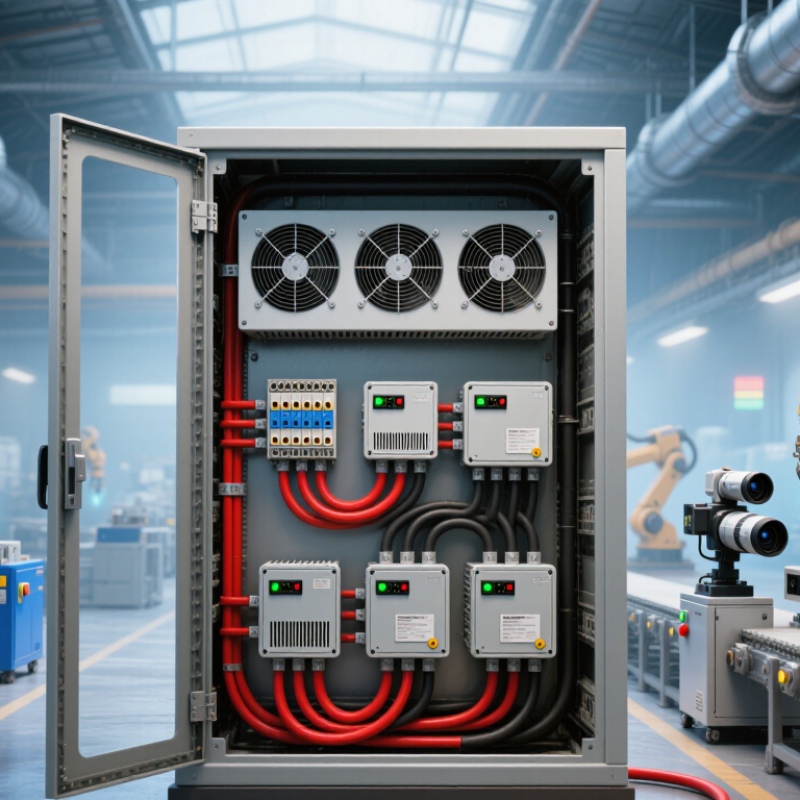
How to Choose an Industrial Power Supply in 2026?

Define the Power Supply’s Industrial Load and Operating Environment

Industrial power supply selection begins with a precise load definition. The U.S. Department of Energy’s Industrial Motor Systems Market Assessment estimates that motor-driven systems consume about 68% of industrial electricity. That figure changes the sizing conversation. Map continuous, cyclic, startup, and regenerative loads separately. Record voltage, current, inrush, power factor, and acceptable ripple. A 24 V control rail may require little energy, yet its interruption can stop an entire production cell.

Operating environment deserves equal attention. Do not treat 40°C ambient as a footnote. Heat reduces component life and usually triggers power derating. Dust, oil mist, vibration, humidity, altitude, and electromagnetic noise also affect reliability. IEC 60529 provides IP enclosure classifications, while IEC 60068 offers environmental test methods. The IEA’s Electricity 2024 report expects global electricity demand to grow by about 3.4% annually through 2026. Higher demand makes efficient conversion and thermal management more important.

Choose the supply around the worst credible condition, not the average shift. Check startup behavior, overload protection, hold-up time, and cooling clearance. Leave practical capacity margin, but avoid excessive oversizing, which can reduce efficiency at light loads. A cold-start test may reveal more than a spreadsheet. I would question any design that ignores maintenance access or future load growth. The calculation may be correct, but the factory rarely stays unchanged.

Compare Voltage, Current, Power, and Efficiency Requirements

How to Choose an Industrial Power Supply in 2026?

Start with the load, not the catalog. Record the machine’s nominal voltage, startup voltage, operating current, and peak current. A 24 V control system drawing 6 A needs 144 W continuously. Add headroom for inrush, temperature, and future expansion. In practice, 20–30% spare capacity is a useful starting point, although motors and solenoids may require more. Check both input and output voltage ranges. A supply rated for 230 V AC may not tolerate unstable factory power without derating.

Current capacity protects reliability. Power capacity protects continuity. Efficiency controls heat, cabinet size, and operating cost. The U.S. Department of Energy reports that industrial motor systems consume about 23% of U.S. electricity, showing why conversion losses deserve attention. The IEA Electricity 2024 report also projects global electricity demand growth through 2026, increasing pressure on efficient equipment. Compare efficiency at 25%, 50%, and 100% load, not only the headline maximum. A unit reaching 94% efficiency at full load may perform worse at light load. That detail is easy to miss.

Measure cabinet temperature after several hours. Then calculate wasted heat: a 480 W load at 90% efficiency loses about 53 W. That heat needs somewhere to go. I would not always choose the highest-rated model; it can be expensive and inefficient when lightly loaded. This rule is imperfect. Validate it against ambient temperature, ventilation, short-circuit behavior, and required certifications before installation.

How to Choose an Industrial Power Supply in 2026?

Compare nominal voltage, output current, rated power, and efficiency across representative industrial power supply requirements.

Higher voltage can reduce cable current and conductor losses, while rated power should include continuous load demand plus an appropriate design margin. Efficiency affects heat generation, enclosure cooling, and operating cost. Always verify peak loads, startup current, ambient temperature, isolation, and applicable safety requirements before selection.

Evaluate Protection, Reliability, Thermal Management, and Safety

Choosing an industrial power supply in 2026 requires more than checking voltage and wattage. Protection comes first. Specify overvoltage, overcurrent, short-circuit, and thermal shutdown functions. Add surge immunity suited to the installation environment. IEC 61000-4-5 testing can reveal weaknesses that laboratory load tests often miss. In commissioning reviews, a supply may pass a bench test yet fail when motors start nearby. That gap deserves attention.

Reliability should include derating, redundancy, and realistic lifetime estimates. Uptime Institute’s 2024 Global Data Center Survey reported that 53% of respondents experienced an outage during the previous three years. Power problems remained a leading cause. Industrial downtime can also spread through controllers, sensors, and communication networks. Select equipment with documented MTBF conditions, not impressive figures without temperature details. I still distrust any reliability claim that ignores dust, vibration, and maintenance intervals.

Thermal management is equally practical. Measure the enclosure temperature, airflow direction, and heat accumulation around neighboring devices. A supply rated for 50°C may require output derating above that point. The IEA’s Electricity 2024 report projects global electricity demand to grow by about 3.4% annually through 2026. Higher system demand can increase heat inside crowded cabinets. Use spacing, forced ventilation, or cabinet cooling when necessary. Do not assume a larger fan solves everything. Fan failure, blocked filters, and poor cable routing remain common, preventable weaknesses. Safety certification should match the application, installation category, and required isolation distance.

Select the Right Power Supply Form Factor and Control Features

Choosing an industrial power supply starts with the cabinet, not the catalog page. In field installations, I measure the available rail, panel depth, airflow path, and service clearance. A DIN-rail unit suits compact control cabinets. An enclosed supply fits exposed machinery better. Open-frame models save space, but they need a protected enclosure. Rack-mounted supplies support centralized systems and easier replacement. Form factor affects cooling, wiring access, and maintenance time. A small mistake here can become a hot cabinet.

Control features should match the operator’s real workflow. Remote on/off is useful when a controller must isolate loads without opening the cabinet. Adjustable voltage and current limits help during commissioning and fault testing. Monitoring outputs can report voltage, current, temperature, or a power-fail condition. For larger systems, digital communication enables settings, alarms, and event records. Keep the interface simple. Operators may need answers with gloves on. I prefer clear terminals, readable indicators, and documented signal behavior. Fancy control is not automatically better.

Before approval, check derating curves at the actual ambient temperature. A supply rated at 40°C may behave differently beside a motor drive. Confirm transient response, short-circuit recovery, leakage current, and grounding requirements. I also test cable routing with the cabinet door closed. It sounds minor. It is not. One design review I would repeat is verifying remote-control polarity; an assumed signal state caused an unnecessary commissioning delay. Leave room for heat and future wiring. Datasheets deserve practical questions, not blind trust.

Verify Compliance, Lifecycle Cost, Installation, and Maintenance Needs

How to Choose an Industrial Power Supply in 2026?

Compliance should be verified before comparing prices. Check IEC 62477-1 safety requirements, EMC limits, insulation ratings, and regional certification records. Request test reports, not marketing claims. The IEA Electricity 2024 report estimates data-centre electricity demand could exceed 1,000 TWh by 2026. This growth increases pressure on stable, efficient conversion equipment. Confirm input tolerance, harmonic performance, short-circuit protection, and suitability for your facility’s grid.

Lifecycle cost deserves a spreadsheet. Include purchase price, conversion losses, cooling demand, replacement modules, labor, and disposal. A supply operating at 92% efficiency wastes more energy than one reaching 96%, especially under continuous loads. Measure the real load profile, including startup surges. Oversizing feels safe, but it can reduce efficiency and increase cabinet space. Uptime Institute’s 2024 Global Data Center Survey reported that 54% of respondents experienced an outage costing more than $100,000. Reliable redundancy may therefore cost less than a single failure.

Installation details often decide reliability. Leave airflow clearance, separate power and signal wiring, and tighten terminals to the specified torque. Record serial data and inspection dates. Ask whether technicians can replace fans or modules without removing the entire cabinet. MTBF figures need caution; they are statistical estimates, not guarantees. I have seen clean specifications fail in dusty rooms with poor ventilation. That uncomfortable possibility should shape the maintenance plan. Industry data helps, but site evidence matters more.

How to Choose an Industrial Power Supply in 2026? – Verify Compliance, Lifecycle Cost, Installation, and Maintenance Needs
Power Supply Architecture Typical Output Range Typical Input and Output Characteristics Typical Efficiency Thermal and Derating Considerations Installation Requirements Maintenance and Service Needs Compliance Checks Lifecycle-Cost Profile Best-Fit Applications
Enclosed AC/DC Switching Supply 50 W–1,000 W Usually accepts single-phase AC input; common outputs include 12 VDC, 24 VDC, and 48 VDC. Output is generally fixed-voltage DC with overload and short-circuit protection. Approximately 85%–94% Output power normally decreases at high ambient temperature. Ventilation clearance is required, and heat losses must be included in the enclosure thermal calculation. Panel or chassis mounting; requires protected AC wiring, grounding, strain relief, and sufficient airflow. Terminal covers may be required where accidental contact is possible. Usually low maintenance. Inspect terminals, cooling paths, corrosion, and abnormal noise during scheduled shutdowns. Replace the unit if internal components fail. Confirm the applicable industrial safety, EMC, environmental, and installation standards. Common evaluation areas include IEC 62368-1, IEC 61010-1, IEC 62477-1, IEC 61000-6-2, and IEC 61000-6-4, depending on the end application. Low purchase cost; energy losses and enclosure cooling are the main operating-cost factors. General control panels, sensors, actuators, access systems, machine controls, and low-to-medium power automation equipment.
DIN-Rail Industrial Power Supply 15 W–960 W Designed for control cabinets and DIN-rail mounting. Common output voltages are 12 VDC, 24 VDC, and 48 VDC. Many models support a wide AC input range. Approximately 88%–96% Check the manufacturer’s derating curve, especially above 40–60°C. Closely packed modules can create localized hot spots inside the cabinet. Fast rail installation and easy replacement. Reserve space for wiring bends, ventilation, DC distribution, and future expansion. Follow the specified mounting orientation. Low routine maintenance. Visual inspection, terminal torque checks, alarm review, and cabinet temperature checks are normally sufficient. Verify suitability for the cabinet environment, EMC category, overvoltage category, pollution degree, short-circuit behavior, and required protective earth arrangement. Low labor cost and good replacement availability; higher purchase cost than basic open-frame designs may be offset by simpler installation. PLC cabinets, distributed I/O, industrial sensors, building automation, instrumentation, and machine-control panels.
Open-Frame AC/DC Supply 25 W–1,500 W Board-level or chassis-mounted design. Often provides a compact solution for equipment with an existing protective enclosure and controlled internal wiring. Approximately 85%–94% Requires careful airflow design. Internal equipment temperature can be significantly higher than room temperature, which can reduce service life. Must be installed inside a suitable enclosure with protection against electric shock, dust, moisture, and accidental contact. Mechanical and electrical integration is the responsibility of the equipment designer. Maintenance depends on the host equipment. Access may require removing covers or disconnecting assemblies, increasing service labor. System-level compliance is critical because the open-frame supply is evaluated as part of the final equipment. Verify creepage, clearance, insulation, leakage current, EMC, and grounding in the completed product. Low component cost but potentially higher engineering, assembly, testing, and service costs. Embedded industrial equipment, test instruments, OEM machinery, displays, and products with a dedicated internal enclosure.
Modular or Configurable Power System 500 W–10 kW or higher Uses parallel modules, configurable output channels, or a common power shelf. May support current sharing, hot-swap modules, monitoring, and N+1 redundancy. Approximately 90%–96% High power density makes thermal design essential. Calculate cabinet heat dissipation, fan airflow, module spacing, and the effect of blocked filters or failed fans. Requires coordinated mechanical design, busbar or high-current cabling, protective devices, and clear module access. Weight and fault-current levels must be considered. Individual modules can often be replaced without replacing the complete system. Fans, filters, connectors, and power modules should be included in the spare-parts plan. Check system-level fault containment, touch protection, EMC, current sharing, redundant operation, control interfaces, and the standards applicable to the complete equipment. Higher initial cost but favorable for high availability, capacity expansion, and reduced production downtime. High-power automation, semiconductor equipment, battery production, telecommunications infrastructure, and continuous-process systems.
Redundant DC Power System 120 W–3,000 W or higher Uses two or more power modules or feeds with diode OR-ing or active redundancy. The load can continue operating after a single module or input failure when correctly sized. Approximately 88%–95% Redundancy does not eliminate thermal limits. Size each module for the required single-fault condition and account for ambient temperature and future load growth. Requires independent input protection, correct current-sharing or redundancy modules, alarm wiring, and clear separation of redundant supply paths where practical. Test alarms and failover functions periodically. Keep at least one compatible spare module when downtime has a high financial impact. Verify single-fault behavior, alarm contacts, backfeed protection, short-circuit coordination, and the safety requirements of the complete control system. Higher capital cost and slightly higher standby losses, but potentially much lower downtime cost. Safety-related controls, process automation, network infrastructure, burner management, and equipment that cannot tolerate a single power-module failure.
DC UPS or Buffered 24 VDC System 120 W–5,000 W or higher Combines an AC/DC supply with an energy-storage device and charging circuit. Provides short-term ride-through during voltage dips, interruptions, or controlled shutdowns. Approximately 85%–94% in normal operating mode Battery or supercapacitor temperature strongly affects capacity and service life. Provide ventilation where required and follow the storage-device temperature limits. Requires space for the energy-storage unit, suitable DC protection, correct cable sizing, polarity control, and a documented shutdown or ride-through strategy. Periodic battery health checks, alarm testing, capacity verification, and planned replacement are required. Battery replacement intervals depend on chemistry, temperature, and operating conditions. Check electrical safety, EMC, battery protection, fire requirements, energy-storage transportation rules, and the applicable UPS or industrial control standards. Higher total cost due to batteries and replacement labor; can prevent expensive data loss, machine trips, and uncontrolled process stops. Industrial controls, network equipment, data acquisition, process instrumentation, and systems requiring ride-through or orderly shutdown.
Three-Phase Industrial Power Supply 1 kW–20 kW or higher Accepts three-phase AC input and distributes high DC power more efficiently than multiple small single-phase supplies. May include power-factor correction and DC monitoring. Approximately 90%–97% Requires analysis of cabinet heat, phase balance, input harmonics, and available short-circuit current. Derating may apply at low input voltage or high ambient temperature. Requires qualified installation, three-phase isolation, protective devices, grounding, phase identification, and appropriate high-current conductors. Inspect high-current connections, cooling fans, filters, DC bus condition, alarms, and thermal trends. Preventive maintenance is important because faults can affect many downstream loads. Verify input protection, harmonic and power-quality requirements, EMC emissions and immunity, insulation coordination, and the installation rules for the facility voltage system. Efficient for high-power loads; installation and commissioning costs are higher than for single-phase systems. Large machinery, robotics cells, motor-control systems, production lines, charging infrastructure, and high-power automation.
Programmable or Digitally Monitored Power Supply 100 W–10 kW or higher Provides adjustable voltage or current limits, remote enable, status data, event logging, and communication through industrial interfaces. Approximately 85%–96%, depending on operating point Efficiency may vary significantly with load level and operating mode. Confirm thermal behavior at the actual programmed voltage, current, and duty cycle. Requires control wiring, network segregation where applicable, software configuration, access control, and documented parameter settings. Firmware, configuration backups, alarm-history review, communication checks, and calibration verification may be required in addition to physical inspection. Evaluate cybersecurity, functional safety interfaces, EMC, software-controlled limits, remote shutdown behavior, and compliance of the complete integrated system. Higher acquisition and integration cost, but better diagnostics and lower troubleshooting labor can reduce long-term operating cost. Automated test systems, battery manufacturing, laboratories, semiconductor tools, electroplating, and condition-monitoring applications.
Harsh-Environment or Conformal-Coated Supply 50 W–1,500 W Designed for increased resistance to humidity, dust, vibration, corrosive atmospheres, or temperature extremes. Protection level depends on the enclosure and installation, not only the power supply. Approximately 85%–95% Confirm operating temperature, storage temperature, altitude, humidity, vibration, shock, and corrosion limits. Conformal coating does not make a unit waterproof. Requires appropriate enclosure rating, cable glands, condensation control, drainage, grounding, and mechanical vibration protection. Inspect seals, cable entries, corrosion, coating damage, condensation, and mounting hardware. Cleaning and inspection intervals should reflect the site environment. Verify environmental test evidence, ingress protection of the final enclosure, EMC performance, insulation system, and any hazardous-location requirements. Higher purchase cost may be justified when it reduces corrosion failures, unplanned replacement, and production interruptions. Outdoor cabinets, wastewater facilities, marine equipment, mining, food-processing areas, and high-humidity industrial sites.
Safety-Extra-Low-Voltage DC Supply 30 W–600 W Typically provides output below 60 VDC, commonly 24 VDC, for control and instrumentation circuits. The safety benefit depends on isolation and the complete circuit design. Approximately 85%–95% Low-voltage operation does not remove thermal derating requirements. Calculate voltage drop in long cables and verify the minimum operating voltage of connected loads. Use suitable overcurrent protection, segregate circuits where required, label polarity and voltage, and provide accessible test points for commissioning. Routine checks include output voltage, load current, terminal condition, insulation condition, and the operation of downstream protective devices. Verify protective separation, dielectric strength, leakage current, earth-fault behavior, touch-voltage limits, and the safety standard applicable to the end equipment. Usually economical and easy to service; cable sizing and voltage-drop losses can become significant in large facilities. Instrumentation, sensors, PLCs, control relays, valves, indicators, and distributed automation systems.
Selection note: The ranges above are typical engineering values rather than guaranteed specifications for every product. Before purchase, confirm the exact datasheet, applicable legislation, certification scope, ambient conditions, load profile, derating curve, fault-current coordination, spare-parts strategy, and total cost of ownership for the intended installation.

FAQS

What information should I collect before choosing an industrial power supply?

Record nominal voltage, startup voltage, operating current, and peak current. Begin with the load, not the catalog.

How much power does a 24 V system using 6 A require?

It needs 144 watts continuously. Add 20–30% spare capacity for inrush, heat, and future expansion.

Why should I compare current and power separately?

Current capacity supports reliable operation. Power capacity supports continuity during demanding conditions. Motors may need extra startup capacity.

How should efficiency be evaluated?

Check efficiency at 25%, 50%, and 100% load. Full-load efficiency can hide poor light-load performance.

How can I estimate heat loss inside a cabinet?

A 480-watt load at 90% efficiency loses about 53 watts. That heat must leave the enclosure.

What protections are important for industrial equipment?

Look for overvoltage, overcurrent, short-circuit, and thermal shutdown protection. Add surge protection suited to the installation environment.

How does cabinet temperature affect power supply performance?

Measure temperature after several operating hours. Output may need derating above the stated temperature limit.

Is the highest-rated model always the best choice?

Not always. It may cost more and operate inefficiently at light loads. Check ventilation, vibration, dust, and expansion plans.

What reliability details should I verify?

Review realistic lifetime data, derating conditions, maintenance intervals, and redundancy options. Impressive reliability numbers can still lack context.

What installation details are easy to overlook?

Check airflow direction, cable routing, cabinet spacing, filter blockage, and required isolation distances. A larger fan does not fix everything.

Conclusion

Choosing the right Industrial Power Supply in 2026 begins with a clear understanding of the equipment’s load profile and operating environment. Assess the required input and output voltage, current, total power demand, efficiency targets, duty cycle, and possible fluctuations. Environmental factors such as temperature, humidity, dust, vibration, and available space should also guide the selection. The power supply must provide stable performance under normal and demanding conditions.

Next, evaluate protection functions, reliability, thermal management, and safety features, including safeguards against overload, short circuits, overvoltage, and overheating. Select a suitable form factor, mounting method, and control interface based on the system architecture and future expansion plans. Before installation, verify applicable compliance requirements, serviceability, expected lifespan, spare-part availability, and maintenance procedures. A complete lifecycle cost review should include energy consumption, downtime risks, installation effort, inspections, and replacement costs. This systematic approach helps ensure dependable operation, efficient performance, and long-term value.

Mason

Mason

Mason is a seasoned marketing professional with a deep expertise in the company's offerings and a passion for driving brand awareness. With a strong background in digital marketing strategies, he has an innate ability to connect with diverse audiences and effectively communicate product benefits.......