Choosing a High Voltage Power Supply is not a simple matter of matching voltage and wattage. The wrong unit can overheat, arc, drift, or damage sensitive equipment. A laboratory bench, an electron-beam system, and an industrial coating line demand very different electrical behavior.
Dr. E. Kuffel, a respected high-voltage engineering author, wrote, “High voltage engineering is closely associated with the development of electrical power systems.” That principle still matters. A reliable High Voltage Power Supply must work safely within its intended environment, not only perform well on a specification sheet. Engineers should examine output stability, ripple, insulation, current limiting, cooling, control interfaces, and fault protection. Small details matter. A loose connector can become a dangerous weak point.
This guide presents seven practical tips for evaluating a High Voltage Power Supply. It considers the real load, operating cycles, enclosure conditions, maintenance needs, and manufacturer support. It also asks uncomfortable questions. Is the stated voltage continuous or intermittent? Does the supply remain stable when the load changes suddenly? Can technicians service it without guesswork?
There is no perfect checklist. I have seen attractive specifications hide unsuitable cooling and poor regulation. That is why careful comparison remains essential. Measure the application, not just the catalog. A dependable choice should deliver controlled energy, predictable performance, and a clear safety margin over time.
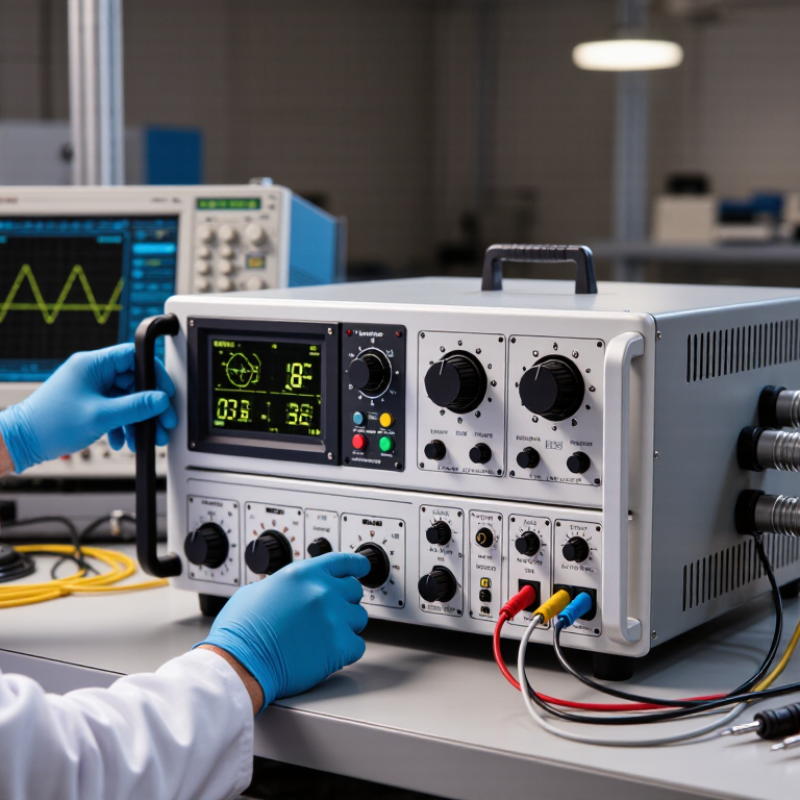
Choosing a high voltage power supply starts with defining the real electrical load. Rated voltage is the maximum continuous voltage the supply should deliver safely. It is not merely a number printed on a specification sheet.
Measure the operating voltage required by the circuit, then check its tolerance during startup and normal operation. Rated current must cover the load’s highest continuous demand, including brief charging surges. A supply rated for 10 mA may struggle when a capacitor initially draws 15 mA. That small mistake can cause voltage collapse, overheating, or unstable readings.
Calculate power with a simple formula: voltage multiplied by current. For example, a 2,000 V load drawing 20 mA needs 40 W. Add 10–20% power headroom, giving a practical target of 44–48 W. This margin helps the supply handle temperature changes, aging components, and short demand increases. More headroom is not always better. An oversized supply may regulate poorly at very light loads.
I once selected current from the average measurement instead of the startup peak. The system worked briefly, then became unreliable. I should have checked the full load profile. Review ripple, regulation, insulation, cooling, and protection features before purchasing. Confirm readings with properly rated test equipment, because a displayed value is not automatically an accurate value.
Choosing a high voltage power supply starts with the load, not the catalog headline. Define the required voltage, current, duty cycle, and load changes. A supply rated for the peak current may still struggle during rapid transitions. Leave practical headroom. It protects stability.
Treat output ripple below 1% as a working requirement, not a decorative specification. Check whether the figure applies across the full voltage range. Ask for test conditions, bandwidth, load type, and probe method. A noisy measurement setup can exaggerate ripple. I once trusted a low ripple number without checking bandwidth, and the result was misleading.
Verify regulation within ±1% at minimum, typical, and maximum load. Regulation can drift during warm-up or sudden current changes. Test it with the actual cable length and grounding arrangement. Also review protection features, insulation ratings, cooling needs, and remote-control behavior. Select a unit with clear calibration records and accessible technical support. Document your own readings, too. Small wiring changes can alter results. Reliable selection often comes from repeating the test, questioning assumptions, and accepting that the first measurement may be incomplete.
Confirm IEC 61010-1 requirements before comparing voltage ratings or output current. This standard addresses safety for measurement, control, and laboratory equipment. Confirm that it applies to your complete system, not just the power supply. Check the required edition and local evaluation process. A familiar label is not enough.
Ask for clear isolation data. Review working voltage, test voltage, clearance, creepage, and insulation construction. These values depend on pollution degree and overvoltage category. Examine the protective earth path, enclosure, and accessible metal parts. Test the emergency shutdown circuit with the supply energized. It should respond quickly and predictably. Look for output discharge after shutdown. Stored energy can remain dangerous.
Protection details deserve hands-on attention. Check current limiting, arc response, overload behavior, and fault recovery. Verify that interlocks prevent access during hazardous operation. Confirm warning labels remain visible after installation. Ask for test reports, drawings, and traceable production checks. Documentation builds confidence. Do not accept vague claims of compliance. An evaluation may cover one configuration only. Cables, connectors, racks, and added loads can change the safety result. I have seen designs pass an isolated bench test, then fail after a longer cable was installed. That mistake is easy to repeat. Review the entire installation with a qualified safety engineer.
Continuous operation begins with thermal rise, not maximum voltage. Check the temperature increase at the intended load, ambient temperature, and enclosure condition. A supply that runs quietly on an open bench may overheat inside a sealed cabinet. Measure case temperature near vents, terminals, and heat sinks. Keep airflow paths clear. Small details matter.
Duty cycle deserves equal attention. A unit rated for short pulses may not support constant current for eight hours. Compare the required voltage, current, pulse width, repetition rate, and rest interval with the manufacturer’s test conditions. Leave practical headroom instead of operating at the limit. Around 70–80% of the rated load is often more manageable, but the real figure depends on cooling and waveform. This is where selection can become imperfect.
MTBF is useful, but it is not a guarantee. Read the stated temperature, load, and operating profile behind the number. A high MTBF calculated at mild conditions may not represent a hot production cabinet. Review service history, protection behavior, insulation ratings, and ripple performance. Ask whether the rating includes fans, capacitors, and control electronics. They may age differently. During evaluation, run a prolonged test with realistic cabling and load changes. Record temperature drift every hour. A brief pass can hide a slow rise. Safety interlocks and discharge time also deserve verification before continuous deployment.
Choosing a high-voltage power supply starts with more than its maximum output. Compare efficiency above 85% across your real operating range, not only at rated load. A unit may reach 90% near full power, then fall sharply during standby. Measure it under load. Check heat around cables, connectors, and the enclosure, because wasted energy becomes thermal stress. Review ripple, regulation, warm-up time, and output stability. These details often matter more than a headline efficiency figure.
Controls deserve equal attention. Look for clear voltage and current adjustment, remote interfaces, interlocks, fault logging, and a dependable emergency shutdown. Ask whether settings remain stable after repeated cycling. A convenient touchscreen is not enough. Operators need readable feedback from several feet away. Test the control response with gloves and under low lighting. I have seen efficient supplies lose value when awkward controls encourage setup errors or longer maintenance.
Compliance should be documented, not assumed. Request current test reports, insulation ratings, leakage limits, electromagnetic compatibility data, and certificates relevant to your region. Confirm that the complete system, including cables and fixtures, is covered. Compare total cost over its service life: purchase price, cooling, calibration, downtime, replacement parts, and training. A cheaper supply can become expensive after one avoidable failure. Leave room for uncertainty; published figures may change with altitude, temperature, or load pattern. Ask for application-specific data before approving the purchase.
| Selection Tip | Key Dimension to Compare | Practical Reference Range or Target | Why It Matters | How to Verify Before Purchase |
|---|---|---|---|---|
| 1. Compare Efficiency | Efficiency at rated load, half load, and standby | Target at least 85% at the intended operating point. Many modern designs operate in the approximately 85%–95% range, depending on output voltage, power level, topology, and load. | Higher efficiency reduces heat generation, cooling requirements, electricity use, and enclosure stress. | Request an efficiency curve rather than a single maximum value. Check the measurement conditions, input voltage, output power, and minimum load. |
| 2. Match Voltage and Power | Maximum output voltage, output current, power rating, polarity, and operating range | Select a unit that supports the required continuous voltage and current with engineering margin. A common design approach is to allow approximately 10%–20% headroom, subject to the load profile and safety requirements. | Insufficient margin can cause regulation loss, overheating, nuisance trips, or premature component aging. | Calculate both continuous and peak demand. Confirm whether the power rating is limited by voltage, current, temperature, or duty cycle. |
| 3. Evaluate Regulation and Ripple | Line regulation, load regulation, output ripple, noise, and transient response | Typical specifications vary widely. Precision applications may require regulation around 0.01%–0.1%, while ripple may range from tens of parts per million to approximately 1%, depending on the design and measurement bandwidth. | Stable output improves measurement accuracy, beam stability, insulation performance, and process consistency. | Review test conditions, bandwidth, output capacitance, load type, ramp rate, and whether ripple is specified as peak-to-peak or RMS. |
| 4. Check Control and Monitoring | Local controls, analog programming, remote sensing, data interfaces, ramp control, and feedback signals | Common options include front-panel control, isolated analog inputs such as 0–10 V, remote enable, voltage and current monitors, and digital communication such as serial or industrial network interfaces. | Suitable controls improve automation, repeatability, fault logging, and operator safety. | Confirm isolation ratings, command resolution, update rate, communication protocol, ramp-down behavior, and compatibility with the control system. |
| 5. Prioritize Protection and Safety | Overvoltage, overcurrent, arc, short-circuit, overload, overtemperature, interlock, and discharge functions | The supply should provide clearly defined fault limits, controlled shutdown, emergency inhibit, external interlock capability, and a documented output discharge time. | High voltage can remain hazardous after shutdown. Protection must address both equipment damage and stored electrical energy. | Review the safety manual, interlock circuit, accessible energy, discharge path, fault recovery behavior, and installation requirements. |
| 6. Confirm Compliance | Electrical safety, electromagnetic compatibility, environmental, and material requirements | Check the applicable editions of standards such as IEC 61010-1 for laboratory and measurement equipment, IEC 61326-1 for EMC where applicable, plus regional electrical, EMC, and restricted-substance requirements. | Compliance reduces certification delays, integration problems, liability exposure, and redesign costs. | Request declarations, test reports, insulation ratings, creepage and clearance data, grounding instructions, and documentation for the destination market. |
| 7. Calculate Total Cost | Purchase price, installation, cooling, energy, maintenance, calibration, downtime, and replacement parts | Use a multi-year estimate: Total Cost = Purchase + Integration + Energy + Maintenance + Downtime + Replacement. Compare efficiency at the actual duty cycle rather than using the nameplate maximum. | A lower purchase price may be offset by higher power consumption, more cooling capacity, difficult servicing, or shorter operating life. | Request service intervals, calibration requirements, expected component life, spare-part availability, warranty terms, and realistic operating-energy estimates. |
| Evaluation Note: Compare every specification under the same input voltage, output power, temperature, load type, measurement bandwidth, and duty cycle. High-voltage equipment must be installed, operated, and serviced by qualified personnel in accordance with applicable local safety requirements. | ||||
Rated voltage is the maximum continuous voltage the supply can deliver safely. Measure the circuit’s normal operating voltage. Also check startup and operating tolerances.
Choose a rating that covers the highest continuous demand and brief charging surges. A 10 mA supply may struggle when a capacitor briefly draws 15 mA. Small errors matter.
Multiply voltage by current. A 2,000 V load drawing 20 mA requires 40 W. Add 10–20% headroom, creating a practical target of 44–48 W.
Headroom helps manage temperature changes, aging components, and short demand increases. More is not always better. An oversized supply may regulate poorly under very light loads.
Confirm applicable IEC 61010-1 requirements for the complete system. Review working voltage, test voltage, clearance, creepage, insulation, and overvoltage category. A familiar compliance label is not enough.
Check current limiting, arc response, overload behavior, and fault recovery. Verify that interlocks block access during hazardous operation. Test emergency shutdown while the supply is energized.
Dangerous stored energy may remain. Check whether the output discharges quickly and predictably. Confirm the discharge design with properly rated test equipment.
Cables, connectors, racks, and added loads can change the safety result. I once overlooked a longer cable. The isolated bench test passed, but the installed system did not.
Request test reports, drawings, and traceable production checks. Review ripple, regulation, cooling, insulation, and protection data. Confirm displayed readings independently. Numbers can mislead.
Choosing the right High Voltage Power Supply requires more than selecting the highest available voltage. Start by defining the required rated voltage and current, then add a practical 10–20% power headroom to support startup demands, load variation, and future adjustments. Output quality is equally important, so look for ripple below 1% and voltage regulation within ±1% when stable performance is essential.
Safety and long-term reliability should also guide the decision. Confirm compliance with IEC 61010-1, suitable electrical isolation, and protection against overvoltage, overcurrent, short circuits, and overheating. Evaluate thermal rise, operating duty cycle, cooling requirements, and MTBF to ensure dependable continuous operation. Finally, compare efficiency above 85%, control options, monitoring features, regulatory compliance, maintenance needs, and total ownership cost. A well-balanced evaluation will help you select a supply that is safe, efficient, stable, and appropriate for your application.

NVVV Electric