China has become a major manufacturing base for Custom Power Supply solutions used in medical equipment, industrial automation, telecommunications, and renewable energy systems. Demand is becoming more specialized. Buyers now expect stable output, compact thermal designs, traceable components, and dependable after-sales support.
MarketsandMarkets estimates that the global power supply market will grow substantially through 2028, driven by data centers, electric vehicles, and industrial electronics. The International Energy Agency also reports continuing growth in electricity demand from digital infrastructure. These trends create opportunities for Chinese manufacturers with strong engineering and production capabilities. However, market size alone does not prove supplier quality.
This guide examines China’s top Custom Power Supply manufacturers through practical criteria. These include design experience, prototype speed, production capacity, efficiency testing, and compliance documentation. Relevant standards may include IEC, UL, CE, RoHS, and ISO 9001 requirements, depending on the target market. A reliable factory should explain its transformer design, protection circuits, burn-in process, and electromagnetic compatibility testing clearly.
The ranking is not perfectly objective. Supplier websites often highlight strengths while omitting failure rates or long-term field data. That limitation matters. A polished sample may not represent a ten-thousand-unit order. We therefore consider technical evidence, customer support, factory audits, and documented quality controls. Details such as labeled test benches, thermal chambers, and serialized inspection records can reveal more than impressive brochures. Readers should still verify certificates and request recent samples before making a final decision.
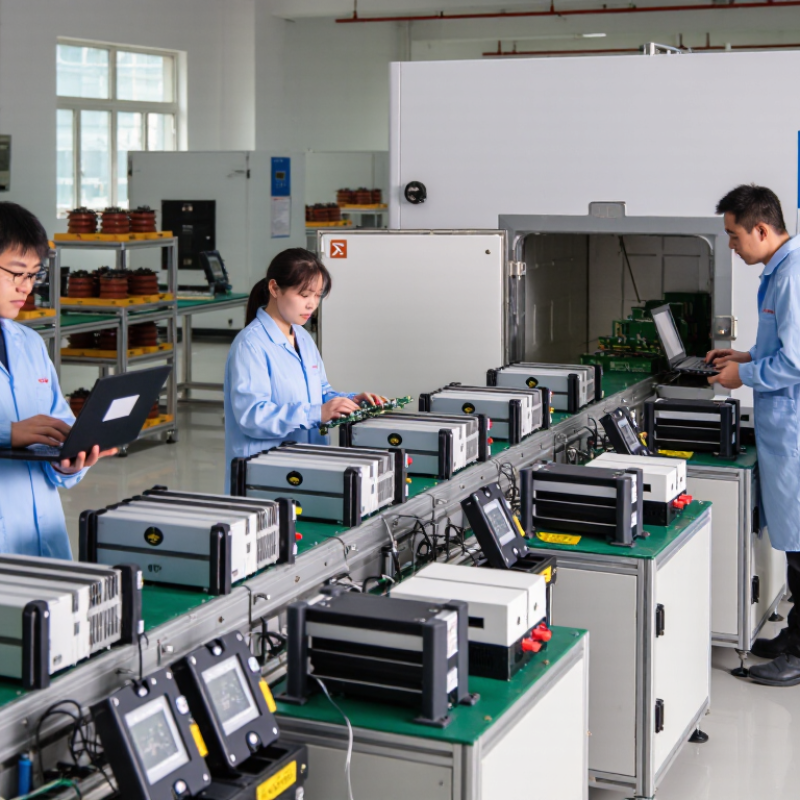
China’s custom power supply sector serves medical, industrial, telecommunications, and renewable energy equipment. Demand is becoming more technical, not merely cheaper. The International Energy Agency reported that global data centers used about 460 TWh of electricity in 2022. It expects consumption to exceed 1,000 TWh by 2026. This growth increases demand for efficient, stable, and application-specific power designs.
A capable manufacturer should show more than a product catalogue. Ask for circuit design records, thermal test results, material traceability, and production inspection procedures. Factory audits should review soldering quality, aging-test capacity, calibration records, and worker training. ISO 9001 certification can support process confidence, but it cannot replace independent testing. Relevant IEC safety requirements must match the final application and destination market. I would also request pilot samples before approving mass production. One overlooked connector can delay an entire shipment.
Tips: Define input range, output tolerance, load behavior, operating temperature, and expected service life before requesting quotations. Share enclosure drawings and connector specifications early. Compare test evidence, not only unit prices. A low quotation may hide tooling, redesign, or compliance costs. Even experienced buyers sometimes miss cable flexibility or standby power requirements. That deserves a second review.
Custom power supply manufacturers differ by the technologies and applications they support. AC-DC specialists convert facility power into stable DC output for industrial equipment. DC-DC manufacturers design compact converters for vehicles, telecom systems, and battery-powered devices. Some suppliers focus on programmable power supplies, allowing engineers to adjust voltage, current, and protection limits through software.
Medical-grade manufacturers work with strict isolation, leakage current, and reliability requirements. Industrial specialists often prioritize high-temperature operation, dust resistance, and long service life. Renewable energy suppliers may develop power units for solar storage, charging systems, and fluctuating loads. The best type depends on the equipment, installation environment, and required output stability.
Experience appears in the details. A capable manufacturer should review load curves, startup surges, cooling space, connectors, and enclosure dimensions before quoting. Ask for efficiency data at different loads, not only the peak figure. Testing should include burn-in, overload protection, short-circuit response, and electromagnetic compatibility checks. Documentation matters too.
Small oversights become expensive.
A supplier may offer an attractive prototype but lack stable production control. This is where evaluation becomes difficult. Request sample reports, revision records, traceability procedures, and realistic delivery schedules. Certifications should match the target market and product category. A technically impressive design still needs maintainable components, clear service support, and repeatable quality across production batches.
Custom power supply manufacturing depends on more than circuit design. Strong suppliers translate load requirements into stable electrical performance. They assess input range, output accuracy, ripple, efficiency, thermal limits, and protection behavior. Experienced engineers also review the equipment’s real operating environment, not only laboratory data.
Production capability should be visible on the factory floor. Controlled assembly areas reduce dust and handling errors. Automated placement improves repeatability, while skilled technicians manage unusual configurations. Each unit should pass incoming material inspection, in-process checks, and final electrical testing. Tests may include voltage regulation, overload response, insulation strength, leakage current, and temperature rise. Traceable serial records make failures easier to investigate.
Safety and quality standards must match the target market and product application. A reliable manufacturer can explain its testing methods, calibration controls, component approval process, and corrective-action procedure. Thermal cycling and burn-in can reveal weak solder joints or unstable components. Still, no production line is perfect. Test coverage may miss a fault under rare conditions, and overly strict settings can increase cost without improving field reliability. Honest suppliers discuss these limits, propose realistic validation plans, and keep engineering changes documented. That practical transparency is often more valuable than impressive production numbers.
| Evaluation Dimension | Core Capability | Common Production Standard or Requirement | Typical Engineering Benchmark | Why It Matters for Custom Projects |
|---|---|---|---|---|
| Product Design | AC/DC adapters, enclosed power supplies, open-frame supplies, battery chargers, DC/DC converters, and industrial power modules. | Design should consider electrical safety, thermal performance, electromagnetic compatibility, mechanical integration, and end-use conditions. | Input, output, power rating, protection functions, dimensions, cooling method, and connector configuration defined before prototype release. | Clear design specifications reduce redesign risk and help ensure the power supply fits the final equipment enclosure and operating environment. |
| Power Range | Capability commonly extends from low-power embedded modules to higher-power industrial and medical equipment supplies. | Rated output must be validated under the specified input voltage, ambient temperature, load profile, and cooling conditions. | Output power is verified through regulated-load testing rather than calculated only from the nominal rating. | Actual load behavior, startup demand, and continuous operation can differ significantly from the equipment's average power consumption. |
| Electrical Safety | Safety architecture covering insulation, creepage, clearance, grounding, leakage current, over-voltage, over-current, and short-circuit protection. | IEC 62368-1 is widely used for information and communication technology equipment; GB 4943.1 is the corresponding Chinese safety standard for many related products. | Safety spacing and insulation systems are selected according to working voltage, pollution degree, material group, and applicable product category. | Safety compliance helps reduce electric-shock, fire, insulation-breakdown, and certification risks in the destination market. |
| EMC and EMI Control | Input filtering, shielding, grounding, switching-layout control, common-mode suppression, and conducted/radiated emissions testing. | Typical evaluation references include CISPR 32, EN 55032, FCC Part 15, IEC 61000-4 series, and applicable national requirements. | Emissions and immunity are checked using controlled test setups before formal certification testing. | Good electromagnetic compatibility prevents interference with sensors, communication equipment, medical devices, and control systems. |
| Energy Efficiency | High-efficiency switching topology, low standby consumption, synchronous rectification, power-factor correction, and optimized thermal design. | Applicable requirements may include EU Ecodesign rules, applicable U.S. Department of Energy external power supply requirements, and market-specific efficiency regulations. | Efficiency is evaluated at defined input voltages and multiple load points, including no-load or standby conditions where applicable. | Higher efficiency lowers operating cost, reduces heat generation, and can extend component life in continuously operating equipment. |
| Thermal Management | Thermal simulation, component derating, heat sinks, airflow planning, temperature protection, and fanless or forced-air cooling options. | Thermal validation should cover the declared operating temperature range and the customer's installation orientation. | Critical semiconductor, transformer, capacitor, and magnetics temperatures are measured at full rated load and specified ambient conditions. | Thermal margins are essential for reliability when the product operates inside a sealed cabinet, outdoor enclosure, or high-temperature environment. |
| Protection Functions | Over-voltage protection, over-current protection, short-circuit protection, over-temperature protection, surge protection, and input under-voltage protection. | Protection behavior should be defined as hiccup, latch-off, foldback, constant-current, or automatic recovery according to the application. | Protection thresholds and recovery behavior are verified by controlled fault-insertion tests. | Predictable protection behavior helps prevent damage to both the power supply and the customer's connected electronics. |
| Magnetics and PCB Assembly | Transformer and inductor design, automated SMT placement, through-hole assembly, selective soldering, and controlled rework processes. | Manufacturing processes commonly reference IPC-A-610 for electronic assembly acceptability and IPC/WHMA-A-620 for cable and wire harness workmanship. | Critical solder joints, polarity, component values, insulation barriers, and transformer winding parameters are inspected during production. | Process control directly affects electrical consistency, mechanical robustness, insulation reliability, and long-term field performance. |
| Quality Management | Incoming inspection, first-article approval, in-process inspection, final testing, nonconformance control, and corrective-action procedures. | ISO 9001 is the most widely recognized quality-management-system framework for manufacturing organizations. | Production records should support component traceability, test-result retention, lot identification, and controlled engineering changes. | A documented quality system improves repeatability and makes it easier to investigate failures or implement design revisions. |
| Environmental Compliance | Material declaration, restricted-substance control, supplier documentation, and management of recyclable or regulated materials. | Common market requirements include the EU RoHS Directive and REACH Regulation, subject to product scope and destination-market rules. | Materials are verified through supplier declarations, compliance records, and laboratory analysis when risk or customer requirements justify it. | Environmental compliance supports international market access and reduces the risk of restricted substances entering the supply chain. |
| Reliability Testing | Burn-in, temperature cycling, humidity exposure, vibration, drop testing, endurance testing, and accelerated life evaluation. | Test methods are selected according to product type, installation environment, customer specifications, and applicable certification requirements. | Testing should use documented sample quantities, test duration, acceptance criteria, and failure-analysis procedures. | Reliability testing identifies early-life defects and verifies that the design remains stable under expected operating stresses. |
| Customization and NPI | Electrical redesign, firmware adjustment, enclosure modification, cable customization, connector selection, label design, and packaging development. | New-product introduction normally includes requirement review, design verification, prototype approval, pilot production, and controlled mass production. | Engineering change notices, approved drawings, bill-of-material control, and pilot-run feedback are maintained throughout the project. | A structured NPI process helps transfer a customized design from engineering samples to stable and repeatable mass production. |
| Production Capacity | Capacity is determined by SMT lines, assembly stations, testing equipment, labor organization, material availability, and production scheduling. | Capacity claims should be evaluated against the specific product mix rather than a single factory-wide number. | A credible capacity plan includes monthly volume, lead time, minimum order quantity, ramp-up plan, and peak-demand response. | Understanding real capacity helps prevent delays when a customized power supply moves from sampling to recurring orders. |
| Final Inspection and Testing | Automated electrical safety testing, output regulation testing, load testing, functional inspection, visual inspection, and barcode or serial-number recording. | Test specifications should be based on approved product requirements and the applicable safety and regulatory standards. | Typical checks include input current, output voltage, ripple, efficiency, hipot, insulation resistance, grounding continuity, and protection response. | Comprehensive end-of-line testing reduces shipment defects and provides objective evidence that each production lot meets its approved specification. |
| Certification Support | Preparation of technical files, test samples, schematics, bills of materials, risk documentation, labels, and certification-factory records. | Potential approvals depend on the destination and application and may include CE-related requirements, UKCA, UL/ETL, FCC, CB Scheme, CCC, or other national approvals. | Certification scope must match the final electrical design, enclosure, component list, markings, and intended application. | Accurate certification planning prevents delays caused by design changes, incomplete documentation, or mismatched approval reports. |
| Supply-Chain Control | Approved-vendor management, alternate-component qualification, incoming material inspection, and risk control for semiconductors, capacitors, magnetics, and connectors. | Critical components should be controlled through approved specifications, change notification, and traceable procurement records. | Substitute components require engineering review to confirm electrical, thermal, safety, EMC, and mechanical equivalence. | Supply-chain discipline protects product consistency and reduces unexpected changes during long-term production. |
Evaluating a Chinese power supply manufacturer requires more than comparing unit prices. Start with traceable evidence. Request factory audit records, production photos, test procedures, and recent quality data. A reliable supplier should explain its control plan for transformers, capacitors, insulation, and thermal materials. Ask for batch-level traceability. Small details reveal operational maturity.
Check compliance against the target market. IEC 62368-1 is widely used for audio, video, information, and communication technology equipment. For external adapters, the U.S. Department of Energy specifies active-mode efficiency and no-load requirements under its energy conservation standards. The European Commission’s Ecodesign Regulation 2019/1782 also sets efficiency limits for external power supplies. Certification alone is insufficient. Verify the certificate holder, model range, test voltage, and report date. A mismatched report is a warning sign.
Study performance under real conditions. Request efficiency curves at 10%, 50%, and 100% load, ripple results, surge testing, and protection behavior. The 80 PLUS technical requirements show why efficiency should be examined across several load points, not only at full load. Review the manufacturer’s corrective-action records, warranty-return rate, and sample consistency. Grand View Research identifies efficiency, miniaturization, and reliability as major power supply market drivers. Still, reports cannot replace physical inspection. I would order pilot samples, repeat tests independently, and leave room for uncomfortable findings. Suppliers sometimes provide excellent prototypes but weaker mass production. That gap matters.
China’s custom power supply manufacturers increasingly serve medical equipment, industrial robots, data cabinets, and renewable energy systems. Each application demands a different electrical personality. A hospital monitor may need low noise and stable backup power. A robotic arm needs fast response during sudden load changes. Outdoor equipment requires sealed housings, thermal control, and resistance to dust or moisture.
In factory evaluations, engineers should inspect more than a polished prototype. Ask for efficiency curves, insulation test records, thermal images, and repeated-load results. A reliable supplier explains component choices and documents design changes clearly. It should also support small pilot runs before mass production. This reduces surprises during installation. I have seen excellent samples fail when cable routing created unexpected heat. That detail is easy to miss.
Future custom power solutions will become more modular, connected, and energy-aware. Wide-bandgap semiconductors may reduce switching losses and shrink cooling systems. Digital control can adjust output behavior as equipment conditions change. Remote monitoring will help maintenance teams detect voltage drift before failure. However, connected power supplies create new data and security concerns. Efficiency alone is not enough. Designers should consider repair access, firmware control, component availability, and end-of-life recycling. The industry still needs better balance between compact design, low cost, and long service life. A smaller enclosure is attractive, but it can leave engineers with too little thermal margin.
Electric vehicle adoption is a major application driver for custom power solutions, including onboard chargers, DC-DC converters, battery chargers, and bidirectional power modules. As global electric car sales continue to increase, demand is also growing for higher power density, improved thermal management, fast charging, and intelligent power conversion.
Data source: International Energy Agency, Global EV Outlook 2024. Figures represent global electric car sales, including battery electric and plug-in hybrid vehicles; 2024 is an IEA forecast.
AC-DC specialists create stable DC output from facility power. DC-DC suppliers build compact converters for vehicles, telecom systems, and batteries. Programmable suppliers let engineers adjust voltage, current, and protection limits through software.
Match the supplier’s experience with your equipment, environment, and output requirements. Medical equipment needs strict isolation and low leakage current. Industrial systems may require dust resistance, high-temperature operation, and long service life.
Provide load curves, startup surges, cooling space, connectors, and enclosure dimensions. Ask for efficiency at different loads. Peak efficiency alone can mislead.
Testing should cover voltage regulation, overload response, short-circuit protection, insulation strength, and temperature rise. Burn-in can expose weak components. Electromagnetic compatibility checks are also important.
Request sample reports, revision records, serial traceability, and batch-level quality data. Inspect incoming materials and final electrical testing procedures. A strong prototype means little if later batches change.
Confirm that safety and energy requirements match the target market and product category. Check the certificate holder, model range, test voltage, and report date. A mismatched report is a warning sign.
Ask for efficiency curves at 10%, 50%, and 100% load. Review ripple, surge behavior, thermal limits, and protection responses. Test the unit under real operating conditions.
Yes, pilot samples can reveal differences between design claims and factory output. Repeat important tests independently. No checklist catches everything. Leave room for uncomfortable findings.
China has become a significant source of Custom Power Supply solutions for businesses seeking flexible designs, reliable performance, and efficient production. This article explains how custom power supply manufacturing works, including the stages of specification analysis, circuit design, prototyping, testing, and mass production. It also introduces key manufacturer categories, such as AC/DC, DC/DC, battery charging, industrial, medical, and embedded power solution providers, while highlighting the importance of engineering expertise and application-specific development.
The discussion focuses on core capabilities and production standards, including component sourcing, thermal management, electrical safety, quality control, and consistency between samples and final products. It also outlines how buyers can evaluate Chinese manufacturers by reviewing technical experience, testing facilities, communication, certifications, production capacity, and after-sales support. Finally, it considers applications in automation, telecommunications, transportation, consumer electronics, and smart equipment, as well as future trends such as energy efficiency, compact designs, intelligent monitoring, and environmentally responsible manufacturing.

NVVV Electric